


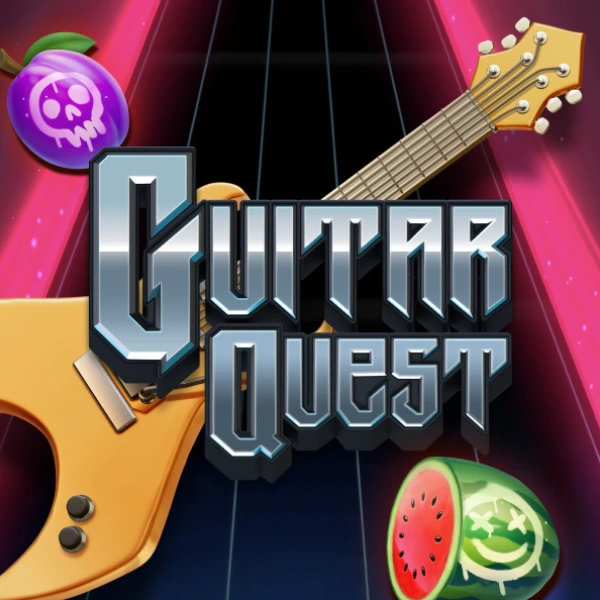






Relax Gaming takes the rock-slot concept and pushes it much further than expected with Guitar Quest, a 5x4 ways-to-win release arriving on May 28, 2026. The game combines four rotating Equalizer mechanics, a progression-focused Backstage feature, and a surprisingly creative Solo Mode that transforms the session into a fast-paced coin collection sequence inspired by rhythm games. With a 96.10% RTP, medium-high volatility, and a 10,000x max win, Guitar Quest positions itself as a feature-heavy entertainment slot rather than a pure max-win chase.
What immediately stands out is how active the game feels. Most spins contain some form of enhancement, modifier, or setup mechanic, which prevents long stretches of completely dead gameplay. The Equalizer system continuously rotates between Wild additions, duplicated symbols, win multipliers, and symbol upgrades, creating a much busier base game than many modern 1,024-ways slots.
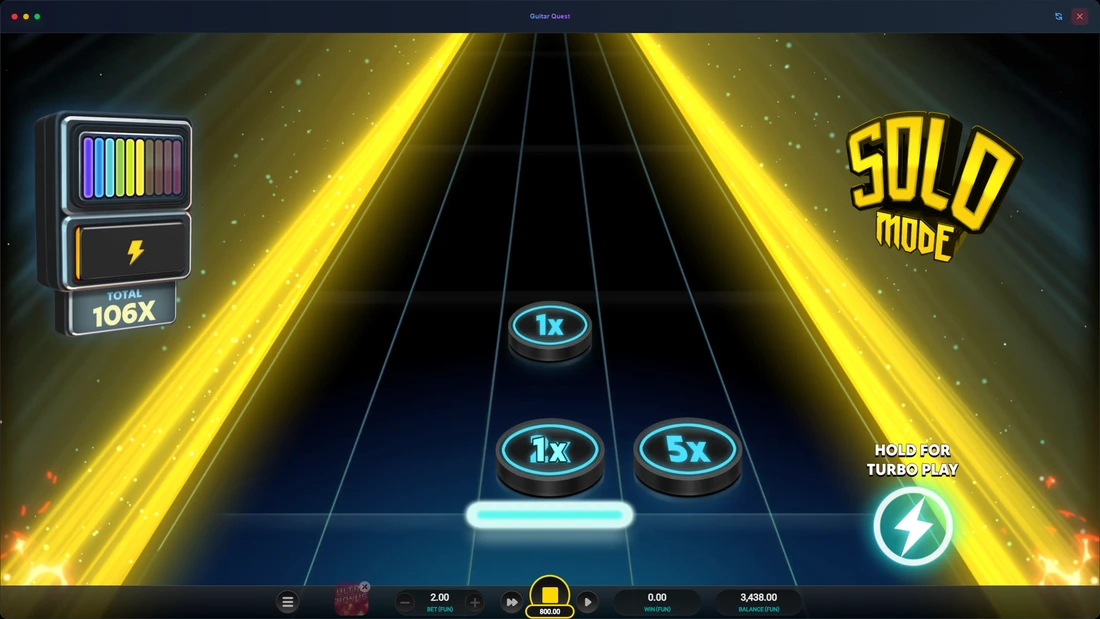
The strongest part of the release is easily Solo Mode. It is not just another reskinned hold-and-win mechanic. The moving Collector Bar, descending symbols, energy system, and increasing speed levels create a feature that feels mechanically different from almost everything else released this year.
The biggest weakness is the ceiling itself. While 10,000x is still respectable, Guitar Quest often feels visually and mechanically capable of supporting something larger.
Visuals & Theme
Guitar Quest commits completely to the live-performance atmosphere. Neon stage lighting, amplifier-inspired reel borders, animated feature triggers, and a constantly moving background give the game a strong sense of momentum throughout the session.
The visual design becomes far more interesting once bonuses begin. Backstage introduces larger visual effects and more aggressive feature stacking, while Solo Mode completely changes the screen presentation with its fretboard-style layout and sweeping Collector Bar mechanic.
The soundtrack deserves credit as well. Relax Gaming avoids the common mistake of looping a short aggressive guitar track endlessly. The music evolves naturally during feature sequences and helps maintain energy during longer play sessions.
This is not the most graphically advanced slot of 2026, but it is one of the more cohesive music-themed releases.
Technical Overview
Provider: Relax Gaming
Release Date: May 28, 2026
Grid: 5x4
Ways to Win: 1,024
RTP: 96.10%
Alternative RTPs: 94.00% / 86.00%
Volatility: 7/9
Maximum Win: 10,000x
Minimum Bet: €0.10
Maximum Bet: €100
The technical profile is solid overall. The standard 96.10% RTP immediately puts Guitar Quest ahead of many newer releases operating in the 94% range. The volatility level also feels accurate in practice — the game can go quiet temporarily, but features appear frequently enough to maintain session flow.
The issue is the ceiling. A game with this much layering, progression, and escalation naturally creates expectations for a larger max exposure. 10,000x no longer feels especially large in the current market, particularly when several feature combinations create moments that look far more explosive than the cap allows.
Players should also pay attention to RTP versions. The 94% alternative model is already a meaningful downgrade, while the 86% German configuration dramatically changes the value profile of the game.
Equalizer Mechanics Explained
Innovation Score: 9.70/10
The Equalizer system is what drives the entire base game experience.
At the start of spins, one or more mechanics may activate simultaneously:
Wild Jam
Random Wilds are added to reels 2–5 before symbols land.
Twin Riff Split
Highlighted positions duplicate symbols occupying them, including Wilds.
Fired Up Multiplier
Winning spins can receive multipliers between 2x and 10x.
Symbol Upgrade
Lower-paying symbols are removed from the current spin.
Individually, none of these ideas are revolutionary. The innovation comes from how often they combine together and how aggressively the game stacks them during feature sequences.
A spin featuring Wild Jam, Twin Riff Split, and Fired Up Multiplier simultaneously can escalate very quickly, especially once duplicated Wild positions begin connecting across multiple reels.
The system succeeds because it improves the feeling of momentum. The base game rarely feels static.
Backstage Feature
Backstage acts as the progression-based bonus mode.
During the feature, collecting Bonus symbols upgrades the Equalizer ladder permanently for the remainder of the session. Features unlock one by one, gradually increasing the intensity of every spin.
The progression path follows this order:
Wild Jam
Twin Riff Split
Fired Up Multiplier
Symbol Upgrade
Once several upgrades become active together, the feature starts generating much larger swings and noticeably stronger reel states.
What works well here is the pacing. The feature constantly feels like it is building toward something rather than simply replaying the same free spin repeatedly.
The downside is that weaker starts can occasionally feel slow before enough upgrades accumulate.
Solo Mode
Solo Mode is where Guitar Quest separates itself from most modern releases.
Instead of standard free spins or a hold-and-win setup, the feature transforms into a moving collection system where coins descend down a fretboard while a Collector Bar moves horizontally across the screen gathering values.
The mechanic continuously escalates:
Speed levels increase over time
Coin values improve
Energy must be maintained through batteries
Guitar God Booster increases premium symbol frequency
Expander temporarily widens the Collector Bar across the entire screen
The increasing speed is what makes the feature memorable. Early levels feel manageable and readable, but later stages become intentionally frantic. Coins descend rapidly, the Collector Bar accelerates, and the screen becomes difficult to fully track in real time.
That loss of control actually works in the feature’s favour. It creates tension naturally instead of relying entirely on visual effects or forced anticipation.
Solo Mode is one of the more creative bonus systems released in 2026.
Buy Features & Supercharge Options
Guitar Quest includes multiple optional feature entries:
Enhanced Bet (1.5x)
Bonus Reels (10x)
1+ Equalizer Spin (10x)
2+ Equalizer Spin (50x)
Full Volume Spin (600x)
Bonus Buy (100x)
Ultra Bonus Buy (400x)
The 100x Bonus Buy is easily the most balanced option in the game. It offers direct access to the core feature set without becoming excessively expensive relative to the max win.
The 600x Full Volume Spin is much harder to recommend consistently. While guaranteed feature stacking is entertaining, the price point creates a relatively tight payout ceiling ratio.
Bonus Reels at 10x is probably the most reasonable enhancement for regular session play.
Potential & Session Experience
Guitar Quest delivers strong session pacing. The Equalizer system prevents the base game from becoming repetitive, while both major bonus modes offer completely different styles of gameplay.
Backstage focuses on progression and feature accumulation. Solo Mode focuses on speed, pressure, and constant collection activity.
The lower Potential score mainly reflects the 10,000x ceiling itself. The mechanics often create the impression that the game should be capable of larger numbers than it actually allows.
Entertainment is where the game scores highest. Guitar Quest stays active almost constantly, and the combination of music, feature density, and escalating bonus structure makes it easy to continue playing for extended sessions.
Final Verdict
Guitar Quest is one of Relax Gaming’s more creative releases in recent years.
The Equalizer system gives the base game real momentum, Backstage delivers satisfying progression, and Solo Mode introduces a bonus structure that genuinely feels different from the endless stream of recycled hold-and-win features dominating the market.
The game is not perfect. The max win ceiling feels conservative for the volatility level, and some Supercharge options push uncomfortable pricing territory. Alternative RTP versions also remain an industry-wide frustration.
But the overall experience works extremely well.
Most importantly, Guitar Quest feels like a slot built around gameplay pacing rather than just mathematical exposure — and that distinction matters.